Episode Transcript
[00:00:00] Speaker A: Foreign.
[00:00:10] Speaker B: Welcome to this week's edition of Big City Catholics. I'm your host, Bishop Robert Brennan, Bishop of Brooklyn, serving in Brooklyn and Queens.
Last week, I was far from the big city. Not so much in distance, but in lived reality in rural America.
Part of my experience with the US Conference of Catholic Bishops. The Committee on Cultural Diversity brings me to the farms of South Carolina for a pastoral visit with the migrant workers. And boy, what a rich experience it was. So this week I'm joined with Sister Maggie Flores, who is the Farm Workers Ministry coordinator for the Diocese of Charleston. Welcome, Sister Maggie.
[00:00:50] Speaker A: Thank you. Thank you, Bishop, for inviting me to this podcast.
[00:00:53] Speaker B: Thank you, thank you for inviting us into your home, your work, and all the wonderful things that are happening here. Sister, we usually start each session with a prayer, and I'm going to ask if you would lead us in prayer.
[00:01:03] Speaker A: Thank you, Lord, for this beautiful day.
As we are recording this, we're hearing the birds in the background and the breeze of the southern part of the United States and South Carolina.
Thank you, Lord, for those blessings and for the opportunity that you have given me and our team to work with the farm workers.
And I thank you for each and one of them for their struggles, for their tenacity, for their voice that's not sometimes heard, that God may bless them in this day and that they may feel the presence and the welcome, the welcoming of many of us here in the United States and that how grateful we are to God and for the gift of them, how grateful we are, and grateful also for the work they do, for the food they put on our table, for who they are and not so much for what they do.
Thank you, Lord. And we ask blessing on this day and in this moment through Christ our Lord. Amen.
[00:02:33] Speaker B: Amen. In the name of the Father and of the Son and of the Holy Spirit.
[00:02:36] Speaker A: Amen.
[00:02:37] Speaker B: You know, Sister, we began this visit on Sunday, Sunday evening with Mass in one of the farm areas. And it was a very joy filled gathering. You know, we had a little meal after, but I was struck by what Bishop Jacques Fabre, the Bishop of the Diocese of Charleston, said at the beginning of his homily. He just looked out at the crowd and he says, does anybody ever thank you? Does anybody ever thank you for the food that's on their table, for the things that you do? And that kind of has stuck with me throughout the week, that sense of gratitude. Whenever I say grace, I always say, ask you to bless the food that we share and the hands that have prepared and served it to us. But you Realize there are a lot of hands along the way, and some of them are doing really hard work, hard labor under difficult circumstances. And that's sort of been the lens that I've been able to look at this whole visit.
Tell me your history here. It's not that long, relatively speaking. So tell us about the beginning of the farm workers ministry here in the Diocese of Charleston.
[00:03:43] Speaker A: Well, around 20, 20, 21, the Vincentian priests were looking for a place to do migrant ministry. And we went to different dioceses and they had a committee that was in charge of that, and they went to different dioceses looking for.
And they ended up here in South Carolina looking for a place where they can do migrant ministry in a collaborative way.
So the Vincentian priests were inviting the daughters, and we were looking also for an area where we can find some more Vincentian family.
Other communities call them associates. So we were looking for a place and we ended in this diocese. And Bishop Gigaloni, which was the bishop that was here, he said, well, why don't you all work with the farm workers?
And so we came to this area here. It's the area Lexington, Edgefield County, Saluda county, this area here. And there's, I would say, a good number of farms in this. In this section.
And really like there's like seven farms around here. And so we came here to see the reality, like, see, learn or evaluate and act thing, you know.
So we were seeing. To sit, to be able to start the new ministry.
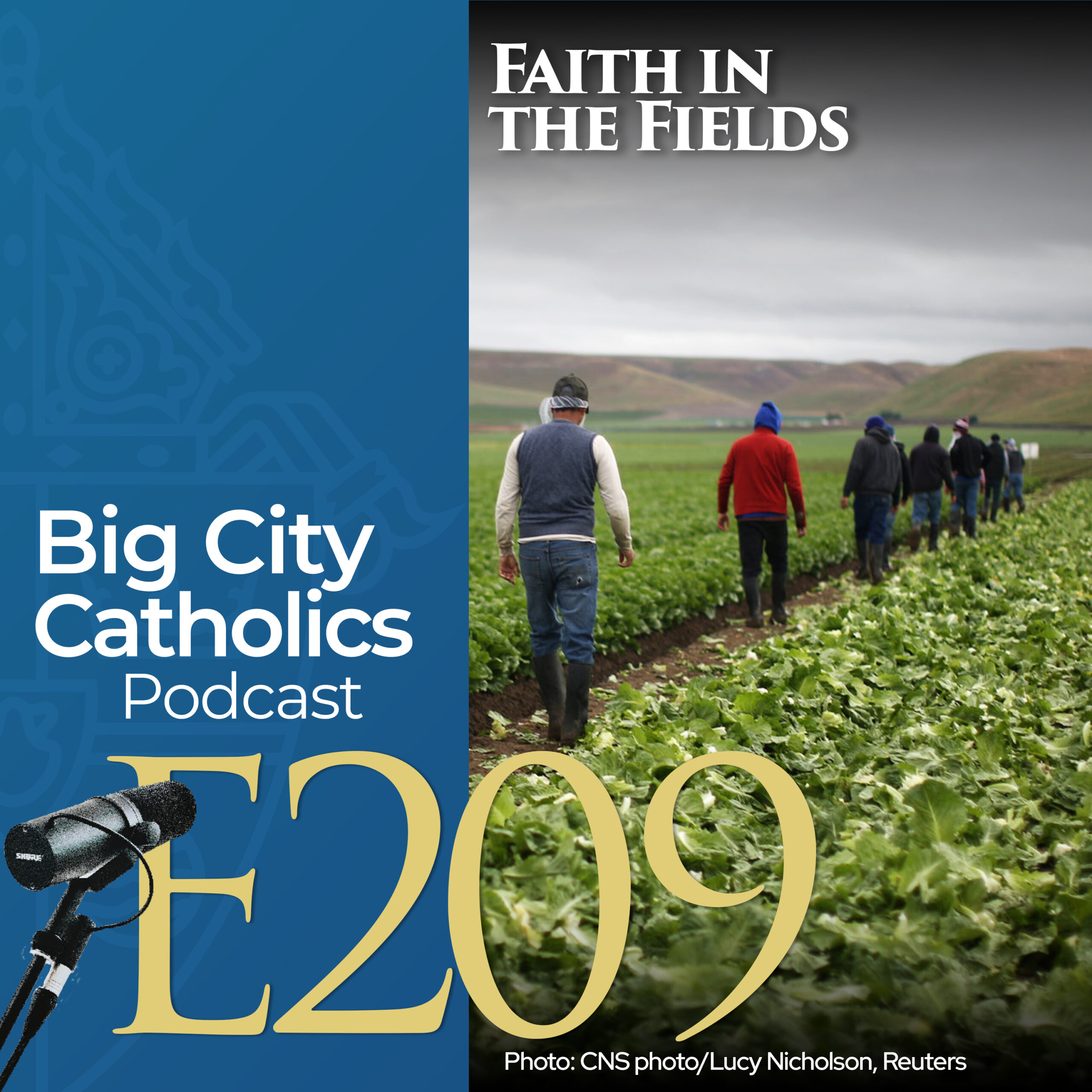
And we went out to the fields and the people were like, thirsty or moments of God, you know, I'm thirsting for having a prayer or praying a rosary. The majority of the farm workers that come to this area come on an H2A visa, and they're Mexican, I would say all of them in this area, except one farm that has a little bit more of Guatemalans. But in this area, most of them are Mexican. Catholics probably have not been practicing because of the work, because they come and they don't have the transportation to go to Mass. So we thought at the beginning to bring them to us, like opening a storefront where they come to us or letting them come to the. The parish, because there's a parish in the. In the middle of this, in this area, and it was a parish that didn't have a pastor.
So we thought of bringing them here.
And Bishop Gillimoni said to us, no, we want you to go to them.
We want you to go out to the peripheries.
And so we started and the question was, how are we going to do this, you know, because these are companies, these are not shelters where you just walk in and give voluntary work. You know, these are businesses, and their main focus is production.
So how do we contact, build those relationships with the owners and see in which way we can help them and also help the farm workers, especially in their spiritual life. But of course, I'm a daughter of charity, and a daughter of charity is.
St. Vincent taught us you attend to the spiritual part, but you have to attend to this, the physical part. You can't preach to somebody that has an empty stomach or preach to somebody that has.
Is lacking of a need, you know, lacking of something and has a primary need.
So we found out that when we came here, the Catholic Charities had started an initiative to going out to the fields to give the people food, because sometimes they come, they're not paid immediately, so they have needs, you know, so Catholic Charities, we was doing that Covid hit. They had to stop. And in the midst of co, we came in to do the pastoral service.
So it was a good opportunity to work together.
And since then we've been working together.
And we also, of course, as daughters of charity, have other connections and people that help us with needs. And for instance, we had a beautiful T shirt and hat drive. And so it was just overwhelming the amount of parishes that were involved.
Deacons were bringing over the stuff to a red shed that we have here. And we were just putting all the stuff in there was just over. It was piles and piles of. Of bags and. And hats and shirts. And I always say in. In this time that I've been here, there's no way. Nobody can pay the work these people. People do. I think the United States has a big debt with these people in many ways, because they come and do this work.
And here there's not the labor. The hands to do is. When you. When you were talking about the hands, I've seen those hands, and sometimes I he's. I seen them clean, but other times I see them or stained by the acid of the tomatoes or. Or marked by the picking.
And those are the hands that I see all the time I go to eat. Yeah.
[00:09:00] Speaker B: Yes.
[00:09:01] Speaker A: Okay.
So that's how this mission started. There's been many challenges, and one was to build relationships with the owners.
So they let us come into the camps and celebrate mass with them or be with them, accompany them.
And to. Now we've had got pretty good relationships. And you saw personally when we went out to some of the companies, how they received us and let us just go out to the fields and be with the people.
[00:09:30] Speaker B: To a certain extent, you're helping even there, because when people are well fed and stronger, even spiritually, they're in a better place. And I'm sure that's to the benefit even of the farm, of the company and all of that. But it's still like, you realize the intense labor. You know, some people are picking from trees and you have to kind of. There's certain ways you have to do that. Others you're bending over all day long picking things from the ground.
It's hard labor. And here in South Carolina, that sun is strong.
That sun is strong. I noticed, though, that the reception that you get, both from the owners, from the managers, and many of them are from the community themselves and from the farm workers, you've built up a relationship with people, and I think that's really served you well and helped you to serve others well.
[00:10:22] Speaker A: Yes, and one of the things I see in the farm workers is that respect and devotion for. Because they're. They're not practicing, but they are Catholics and they've been baptized and they know how to answer to the Mass, you know, and. And they're there present. And that devotion you saw yesterday when. When the bishops were blessing them, they took all their hats off, you know, and when the. In the Eucharist, when the consecration comes, they all kneel down. They know that. And the first time we took Our lady of Guadalupe up to the fields and they gave us. One of the managers gave us a picture of Our lady of Guadalupe that they brought from the basilica in Mexico. And we carry it all around. And you see sometimes they kneel in front of her and. Yes. In that big Mass. I didn't know if you noticed a group of two or three farm workers came in with two boxes of peaches and a candle for Our lady of Guadalupe. And they did a reverence in front of the altar and they left the peaches and put a candle on the foot of the image. And so when you see that there's that reception, you know, and that. And you think that we have it all, you know, we have cathedrals, we have. We have chapels, we have churches and access to Mass. And some I've been in. In places where you have all over. Like, I've been in D.C. in Maryland. I lived in Maryland, D.C. and you had all kinds of hours of Masses to go to.
And these people don't have that opportunity.
And taking to them this opportunity to be able to express their faith is a big thing, and it's a big support for their emotional and spiritual life.
[00:12:12] Speaker B: You're right.
People pray. They're not practicing, not from lack of will, but lack of means. I mean, in a sense, you're kind of.
When you don't have transportation, you're stuck where you're placed. And yet even just going. And some saying a prayer or offering a blessing makes such a big difference, saying the Our Father that everybody joins right in very, very quickly.
Part of the challenge, too, is human dignity. I think we want to enhance human dignity, and I think that seems to be a big part of your work. You told an interesting story, even just going in and making beds as a simple gesture, but actually a loud message.
[00:12:54] Speaker A: Pope Leo wrote a beautiful letter now about magnificat Humanities, Right. Bringing about the greatness of our humanity.
And this year, in January, we got the brilliant idea to go and make some beds for the guys.
Because, of course, we follow the verbs of Pope Francis to welcome, to protect, to promote, and to integrate the migrants here in the United States.
And we got the idea to go and make the beds. So we went and made the beds to 62 farm workers, and we put a Bible on the bed and a bag of toiletries.
Well, you say, well, what's that? You know, and, well, that meant a lot, because when they came, they were, like, stunned or surprised. You know, wow, our beds are made. And one of the managers said, yeah, we're gonna make tacos for the farmer. Because when they came in and they had their beds done with the Bibles and the toiletries, and, well, to our surprise, they made us a letter. And on the letter, it was signed by every farm worker that was in that camp in gratitude of what we had done for them.
And it might be.
You might think that's a very simple thing, but it's modeling. You know what? Sometimes we just need to model. You know, it's like that, what St. Francis used to say. We went out to preach, and we haven't said a word, you know. Well, that was something like that. We went out and did beds. We didn't say a word. But it had a. A ripple effect on other people.
And even the owners were like, wow, you know, you did that for the farm workers. They were telling the managers, tell the sisters, thank you, thank you for what you did. And we did it for the. For them. Because we believe that in the face of these migrant farm workers, in the face of the poor, we see Christ. It was doing it to Christ. And I, when I was doing the beds, I thought many times about, these are my children. I'm making the beds for my children, for these guys, you know, And I felt so, so happy to do that. And I think the sisters were very happy to do that, too.
[00:15:22] Speaker B: And it says to them, you're worth something.
[00:15:25] Speaker A: Yes.
[00:15:25] Speaker B: It calls them themselves, to an appreciation of their dignity and to. To live that human dignity. These are human people who are deserving of respect.
Little messages like that go a long way, and that's just an illustration. But again, you're meeting people where they are.
You're finding all kinds of spiritual needs. Some of the things we talked a little bit about, loneliness, about being separated from family.
[00:15:53] Speaker A: There's a big need of mental health among the farm workers, because it's not easy.
I would be the same way if I had to leave my family and go and work in another country with another culture, you know, it would be very hard for me. And there are. You know, there's been incidents of people that have gotten depressed, anxiety, and that's part of our humanity, too.
Sometimes that we go into those states because we don't have the support and our ministry. Sometimes I hear guys tell me, sister, you. When are you coming back? Or, sister, we missed you, because you're the only people that come here to see us and be with us. And they need that. They need relationships. Not just work relationships, but other relationships that support them and help them.
[00:16:51] Speaker B: And so some people are here maybe six months, some people close to 11 months. Is that correct?
[00:16:56] Speaker A: 10 months. 11 months.
[00:16:58] Speaker B: Wow. That's. It's a lot of time. And, you know, there is a family still at home.
[00:17:02] Speaker A: Yes.
[00:17:03] Speaker B: You know, so it's not. The. The money is not great by our standards, but it does help a family.
And so then people are making great, great sacrifices along the way. You work in partnership with a lot of organizations, and we had the chance to hear from a couple of your partners. So you work closely with Catholic Charities. You mentioned that before.
[00:17:26] Speaker A: Catholic Charities.
Our dedication is pastoral service.
So if there's an agency that sees that there's any need, because the state does have providers, and if the. If any of these providers that we have partnered with or that we.
That we see, because it's not all of them, but if they see some kind of spiritual need, an emotional need, because right now there's not here. I wouldn't say there's something from the Department of Health that helps them with their mental health.
So if there's something spiritual, emotional, they. They come to us. Sister, this camp wants a prayer or this farm worker is going through a situation.
Can you Come. Can you do a prayer for them? Is there something or they ask us, can you help us with this?
And that's the way we partner with some of the agencies that are around.
But our main objective is to go to the farm worker and remind them God is with you. God loves you and what you are doing is so valuable.
Even though in our. Some of our American culture we. We sometimes ignore or we don't give you enough thank yous. We want to say thank you. We want to ask forgiveness for the times we have mistreated you. We want to ask forgiveness for the times that we haven't been just with you. That's the accompaniment that we are doing here.
I call it our little ministry in the middle of the woods.
But you know, there's a lot of farm workers that come to this area. There's a. Companies that have 900 farm workers.
[00:19:19] Speaker B: You know, some of the crops. You have peaches here.
[00:19:21] Speaker A: Peaches, yeah, peaches. We have peaches. Like some. One company does peaches and asparagus. One company does peaches and, and strawberries. And there's one company that does all vegetables. And so sometimes we come home with stuff with the fruit of their hands. And. And I, I just. Sometimes when we put corn on the cob or something on our plate to eat here in the community, it just comes back to me. Those hands, those hands that are.
Are probably marked by scars.
Those hands were the ones that put this corn on my table.
And those hands are so important.
And those hands talk to me about God.
[00:20:14] Speaker B: That's the beauty of the human encounter we see. We meet God when we look deep into someone's eyes with re respect and realize the image and the likeness of God. You know, I'm looking forward. We're doing this sort of mid visit and we'll have another mass at the camp in the next day. But it's been an exciting visit for me. It's a pastoral visit is an experience of learning, of showing appreciation and of some form of solidarity.
And that's really come through so much. I've learned so much from you and from your partners. I've learned so much from the people themselves.
[00:20:54] Speaker A: Yes, I thank you, Bishop, and I thank the USCCB for sending the subcommittee over to us. It's been a great experience.
And I feel, from our bishop, Bishop Jacks, I feel a lot of support. He's there, very attentive to the ministry and also the support of the Conference of Bishops. When you have somebody that's holding your back or patting your back and saying yeah, this is good. You know, you feel much better. You feel you have somebody.
[00:21:25] Speaker B: And that's. That's what we hope to deliver. Because we're only representatives. Yes, that's, you know, we're only representatives. And yes, it's a church. We're one united church.
[00:21:35] Speaker A: Yes.
[00:21:36] Speaker B: And we try to build those bonds of connections and communion. So. So it's all good. You know, you started off with the history.
I have to say, I took a little bit of pride in it. Bishop Guillemon, who invited you here, was a mentor to me. He taught me in the seminary. He was my advisor in the seminary and a longtime friend and collaborator before he came here to South Carolina and continues to be a great friend through St. John's University. The daughters and the Vincentians. So important in my life. And again, part of my formation, I always say my experience, I kind of. I knew I wanted to be a priest, but I didn't want to go to the Minor Seminary. So St. John's was my minor seminary. So so much of the Vincentian charism formed me in my early formation years. And to see those worlds coming together right here in It's a Small World,
[00:22:36] Speaker A: because you're the Bishop of Brooklyn, and I have a very stretched relationship with Brooklyn. I was born in Bridgeport, Connecticut, but most of my family lived in Brooklyn, New York.
[00:22:46] Speaker B: Right. And you still have some people there.
[00:22:48] Speaker A: My sister lives there, my niece's nephew, and my other nieces and nephew from my brother's side, they also live in Brooklyn. And I've always used to go back to Brooklyn because we used to go visit our family there. And so when they told us the Bishop of Brooklyn was coming, it was like, yeah, you know, I lived in Brooklyn I. A year, and I studied in PS93 in Queens.
[00:23:10] Speaker B: Oh, really? Okay. You mentioned your grandmother was.
[00:23:12] Speaker A: My grandmother lived in. In Brooklyn in Evans, and my. My family lives there, you know, in Decatur Street. Oh, so it's a small World.
[00:23:22] Speaker B: Like, it's a small world. Although, I'll tell you something, there's something about Brooklyn and Queens, that thread seems to go, that even in a large world, somehow or another, there's a connection to Brooklyn. And so I just filled with a lot of pride meeting you and seeing the great work you're doing and seeing the work that's done here and continue with Bishop Fob. He, too, has Brooklyn connections and makes those known. So it's nice to see those worlds coming together. Thank you for joining me on this podcast, because I hope this was an opportunity to expand it to other people in Brooklyn to hear the great work that the church is doing through your hands and, and through your heart and through your prayers and that we can be united with one another in that great work.
[00:24:07] Speaker A: Thank you. Thank you.
[00:24:09] Speaker B: Thank you for joining us for this week's edition of Big City Catholics. Again. Please join us next week. Actually, we'll have a special edition with Father Michael Bruno talking about the church's role in the life of our nation as we mock 250 years years. Please join us next week. In the meantime, let's just ask God's blessing. The Lord be with you and with your spirit. May the Lord bless you and keep you. May his face shine upon you and be gracious to you. May he look upon you with kindness and grant you his peace. And may the blessing of Almighty God the Father, the Son and the Holy Spirit descend upon you and remain with you forever and ever.
[00:24:46] Speaker A: Amen.
[00:24:51] Speaker B: Sa.